
The Talon
Vol. 1 | Ed. 16
Why Arizona Students are Fighting the Poisoned Legacy of Navajo Uranium
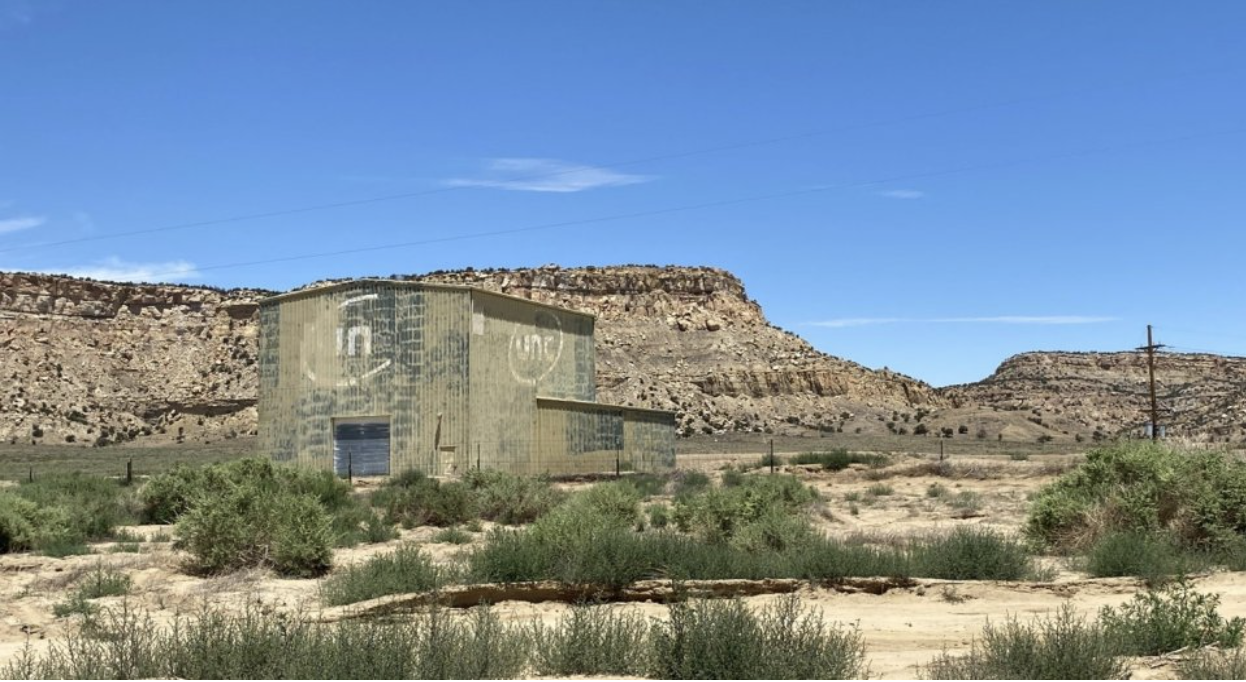
Inside the residence at Northern Arizona University, a generation of Native American college students is quietly coping with an invisible, inherited shock. For young adults living away from home, the clean water taps and fresh mountain air of Flagstaff offer a conflicting contrast to the realities of their hometown’s chapter houses all over the Navajo Nation. More than 500 abandoned uranium mines scattered across Arizona, New Mexico, and Utah are a toxic footprint left by mid-century efforts to build the United States' nuclear arsenal through World War II and the Cold War.
For these students, this history isn’t ancient text found in a library; it is an active, ongoing crisis that ties local environmental ruin to the political choices of young voters. “From my perspective as a Diné history teacher,” explains Mr. Begay, a local educator who has spent years tracking the issue, “we are evaluating a historical response from the federal government that began with systemic secrecy and continues with inadequate accountability today. The cleanup has to happen, but as a people, we have to be the ones pushing for it.”
The historical exploitation of Navajo labor is deeply personal to Mr. Begay. He recalls a devastating story of a close friend who spent years working inside one of the reservation's historic uranium operations without any protective gear, masks, or warnings. Private mining corporations held local lives as cheaply as their labor.
“A friend was working at one of the mines without safety equipment,” Mr. Begay shares. “And one day, the corporation’s men were visiting, and they arrived in full safety equipment with masks. It was only then that he began to question if he was really safe.”
This terrifying double standard was formal. By the late 1930s, federal agencies already possessed strong evidence linking uranium mining to terminal respiratory illnesses. Yet the government, the sole purchaser of the ore until 1971, allowed private individuals to operate with zero safety training or equipment. Navajo miners were treated as expendable labor, with medical studies showing lung cancer mortality rates more than three times higher than expected.
The geographic reach of this contamination directly targets Arizona communities because of the single largest release of radioactive materials in U.S. history: the July 16, 1979 Church Rock spill in New Mexico. On that morning, a mining waste dam burst, releasing 94 million gallons of highly acidic, radioactive sludge into the Puerco River.
The toxic wave did not stop at the state line, though. It traveled 80 miles downstream, carrying the radioactive waste deep into Northern Arizona, poisoning the shared water supplies of local chapters nearby.
The environmental maps of this legacy trace a direct line of generational trauma across the Southwest:
-The Lukachukai Mountain Range: Towers over the Cove
-The Puerco River Basin: Carried the toxic sludge of the 1979 disaster straight across the state, forever altering local farms and livestock safety.
-Cameron, Arizona: Continues to grapple with passed-down waste that heavily impacts surrounding regional populations, including the Cameron, Coal Mine, and Bodaway-Gap chapters.
This geographic reality is exactly why the topic is catching fire among young Native voters. For many students living in the Flagstaff dorms, the contrast between campus life and the ecological state of their home chapters is impossible to ignore. Caleb Kody, a 17-year-old Flagstaff High School senior from the Gallup area, is trying to channel that concern into something with words. It made him think a lot about the elders and what they dealt with: “Instead of just getting jealous or mad about the past, it made me want to help with my voice. I want to take what I learn here back home to educate my siblings or family so that they are safe and with better knowledge of it.”
When asked if enough is being done by federal agencies to fix the issue, Caleb is skeptical. “Not yet,” he notes. “The government announces these big million-dollar cleanup settlements, but when you go back home, the warning signs are still up and the dust is still blowing around. It all feels like they're just putting a cap over an old mine. We need long-term support and better local education so we can take care of our own land.”
Faced with a lacking federal timeline—where the EPA's recent multi-million-dollar settlements only cover a fraction of the 523 abandoned sites—Mr. Begay argues that education is the ultimate weapon of sovereignty. To protect their lands from the looming threat of "re-mining" as global energy demands turn back toward nuclear power, young Diné youth are being taught to use history and data as tools of success.
“We must teach future generations how to define words, how to properly research uranium mines, and how to deeply understand their effects and history,” Mr. Begay believes. “Learn to give back to communities. We as a people, in the community, are big enough to have a voice. We have the power to stay organized, to protect our land, and to never allow the transport of these materials through our homes again.”